

Tag: #Recovery

  • Step 4: A Systems Analyst’s Guide to Moral Inventory

    Step 4: A Systems Analyst’s Guide to Moral Inventory

    The Diagnostic Phase: Debugging the Self

    In the “Systemic Self-Mastery” framework, Step 4 is the diagnostic phase. You cannot patch a bug you haven’t identified. The “Fearless Moral Inventory” is simply a root logs analysis of your own operating system.

    The Recovery Dynamics model teaches us that resentments are “memory leaks” that drain your processing power. If you are operating on a corrupted kernel of fear and anger, the system will eventually crash (relapse). This Step 4 Inventory Guide treats the process not as a religious confession, but as a necessary technical audit.

    This step might seem daunting at first. It compels us to take a deep, honest look at our past mistakes and shortcomings. But within this unflinching self-reflection lies the potential for immense growth.

    Black and white portrait of an elderly woman with a cigarette, evoking depth and emotion.

    A Story of Self-Discovery: Unearthing the Roots

    Imagine Emily, a successful lawyer who has struggled with alcoholism for years. Through the AA program, she’s made significant progress. But a nagging sense of unease persists. She feels a block in her recovery, a lingering shame that keeps her from true peace.

    At a meeting, Emily shares her struggles with her sponsor, Sarah. Sarah, with gentle wisdom, suggests taking a deep dive into Step 4. She explains that by honestly examining our past actions and their impact, we can begin to understand the root causes of our addiction and move towards healing.

    Emily hesitates. Confronting her past is a terrifying prospect. But with Sarah’s support, she embarks on the journey of Step 4. She meticulously writes down her resentments, fears, and character defects. As she delves deeper, she uncovers a web of negative emotions – guilt over broken relationships, anger towards past decisions, and a deep-seated fear of failure.

    The process is painful, but with each honest reflection, Emily feels a burden lift. She begins to see the connection between her past and her addiction. This newfound self-awareness empowers her to forgive herself and others, and to approach the future with a newfound sense of clarity and purpose.

    Man expressing in front of a mirror with vibrant flowers outdoors. Reflective mood.

    Step 4 and the Culture of Self-Awareness

    In today’s world, the concept of self-reflection is gaining increasing traction. Mindfulness practices, therapy, and personal development movements all emphasize the importance of understanding ourselves. Step 4 of AA aligns perfectly with this growing trend.

    By taking a fearless moral inventory, we:

    • Cultivate self-awareness: Step 4 compels us to confront our shadow selves, the hidden aspects of our personalities that contribute to negative behaviors. This self-awareness is crucial for lasting change.
    • Promote emotional healing: By acknowledging past hurts and resentments, we can begin to process and release them, paving the way for emotional healing.
    • Build stronger relationships: Step 4 helps us identify character defects that might be harming our relationships. By addressing these defects, we can build healthier and more fulfilling connections with others.
    A clear view of the moon's surface in the night sky, capturing detailed lunar features.

    The Big Book and the Philosophical Exploration of Step 4

    The Big Book of Alcoholics Anonymous offers a wealth of wisdom on Step 4. It emphasizes the importance of honesty, thoroughness, and fearlessness in conducting our moral inventory. It also assures us that this process is not about self-flagellation, but about self-discovery and growth.

    The Big Book suggests that a higher power can guide us through this challenging step. By surrendering to this power, we can gain the strength and courage to face our past with honesty and compassion.

    A lone woman hikes a grassy hill trail under a cloudy sky, epitomizing solitude.

    Taking the Next Step: A Path to Freedom

    Step 4 of AA is an invitation to embark on a journey of self-discovery. It’s a path fraught with challenges, but ultimately, it leads to a deeper understanding of ourselves and the freedom to move forward with a lighter heart.

    At Willowcherry.us, we invite you to explore the wisdom of AA and embark on your own journey of healing. Remember, you are not alone. There is hope, and there is help available.

    http://youtu.be/1MeqDeBz8zc

  • Substance Use Disorder and the Digital Dopamine Loop

    Substance Use Disorder and the Digital Dopamine Loop

    The New Supply: Algorithmic Addiction

    In traditional recovery, we talk about “people, places, and things.” But what if the most dangerous “place” is the 6-inch screen in your pocket? Modern Digital Addiction Recovery requires us to understand that social media algorithms are engineered to hijack the same dopamine pathways as opioids or alcohol.

    For the Recovery Dynamics student, this is a “Runtime Error” in the brain’s reward system. We must debug the input (screen time) to stabilize the output (sobriety).

    The Algorithm vs. The Addict

    Substance Use Disorder (SUD) is often defined by the inability to stop a behavior despite negative consequences. In the context of Digital Addiction Recovery, the “substance” is not a chemical, but a variable reinforcement schedule delivered via notifications and infinite scrolls. Tech companies employ “Persuasive Design”—psychological triggers that mirror the anticipation phase of drug use.

    For individuals in early recovery, this creates a dangerous cross-addiction. You may have put down the bottle, but if you are spending 8 hours a day doom-scrolling, your dopamine baseline remains dysregulated. The brain cannot distinguish between the “hit” of a like and the “hit” of a substance; it only registers the spike.

    Debugging the Dopamine Loop: Practical Steps

    To achieve digital sovereignty, we must apply the principles of harm reduction to our technology usage. Here are three “System Patches” to regain control:

    1. Greyscale Mode (Visual Detox)

    Turn your phone to “Greyscale” in the accessibility settings. By removing the vibrant colors (specifically red notification bubbles), you strip the device of its primary visual stimulant. This makes the phone a tool, not a toy.

    2. The “Digital Interlock”

    Just as an ignition interlock prevents a car from starting, app blockers like “Freedom” or “Opal” prevent access to high-dopamine apps during vulnerable hours. Automating willpower is a key strategy in forensic mitigation of risky behaviors.

    3. The 24-Hour “Air Gap”

    Institute a weekly “Digital Sabbath” where all devices are powered down. This hard reset allows your neurochemistry to stabilize, much like the initial detox phase in clinical treatment.

    Recovery Dynamics in a Digital Age

    The Kelly Foundation’s Recovery Dynamics model teaches that we must identify the “problem” before we can apply the “solution.” If we ignore the impact of digital overconsumption, we leave a backdoor open for relapse. Digital sobriety isn’t about rejecting technology; it’s about rewriting your user permissions so that you are the admin, not the algorithm.

    Frequently Asked Questions About Digital Addiction

    Is “Digital Addiction” a recognized Substance Use Disorder?

    While not yet in the DSM-5 as a substance disorder, Digital Addiction Recovery treats screen dependency with the same clinical seriousness. It shares key markers with SUD: tolerance, withdrawal, and loss of control.

    How does social media affect early recovery?

    Social media triggers the brain’s reward system, releasing dopamine in unpredictable spikes. For someone in recovery, this can cause “Dopamine Exhaustion,” leading to irritability, depression, and higher susceptibility to relapse.

  • MAT in Kentucky: Separating Fact from Fiction

    MAT in Kentucky: Separating Fact from Fiction

    The “Hardware Patch” for Addiction

    When navigating the landscape of MAT in Kentucky, it is crucial to view the “Hardware Patch” for addiction not as a moral failing, but as a system reset. In the “Systemic Self-Mastery” framework, we view Substance Use Disorder not as a moral failing, but as a biological “runtime error.” Medication-Assisted Treatment (MAT) acts as a hardware patch, stabilizing the neurochemistry so that the software work of Recovery Dynamics can begin.

    While emerging therapies like Ayahuasca garner headlines for their “system reset” potential, the current gold standard in Kentucky remains FDA-approved medications. Below, we separate the clinical facts from the stigma-driven fiction.

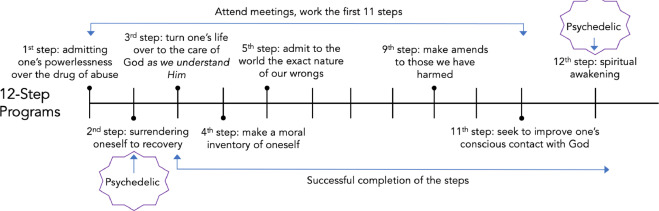
    Classic-psychedelics-in-the-treatment-of-substance-use-disorder_Potential-synergies-with-twelve-step-programs
    Classic-psychedelics-in-the-treatment-of-substance-use-disorder_Potential-synergies-with-twelve-step-programs

    Ayahuasca is a plant-based psychedelic brew that has been used for centuries by indigenous people in the Amazon rainforest for spiritual and medicinal purposes. It is typically made by boiling the leaves of the Psychotria viridis shrub with the stems of the Banisteriopsis caapi vine. Ayahuasca contains DMT (dimethyltryptamine), a powerful hallucinogenic substance, as well as MAOIs (monoamine oxidase inhibitors).

    There is growing interest in the potential therapeutic benefits of ayahuasca, with some studies suggesting it may be helpful in treating addiction, depression, and anxiety. However, ayahuasca use can be risky and should only be used under the supervision of a qualified shaman or healthcare professional.

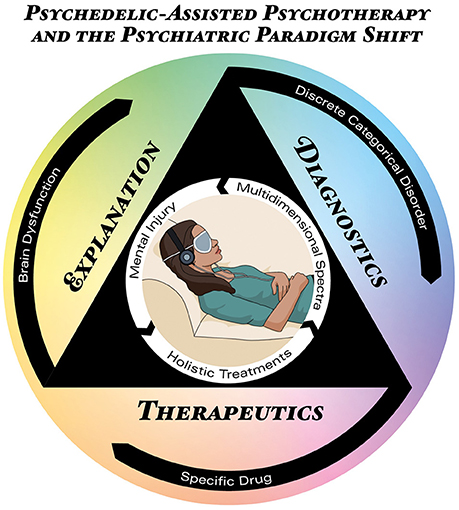
    Psychedelic Assisted Psychotherapy A Paradigm Shift in Psychiatric Research

    Here is a list of drug treatments with high success rates for addiction:

    • Methadone
    • Buprenorphine
    • Naltrexone
    • Nicotine replacement therapy (NRT)
    • Bupropion
    • Varenicline
    • Disulfiram
    • Acamprosate

    Psychotherapy treatments:

    • Cognitive behavioral therapy (CBT)
    • Motivational interviewing (MI)

    It is important to note that ayahuasca and other psychedelic drugs are not a cure for addiction. However, they may be a helpful tool in the recovery process. If you are struggling with addiction, it is important to seek professional help.

    Disclaimer

    It is important to note that ayahuasca is illegal in many countries, including the United States. It is also important to consult with a healthcare professional before using any psychedelic substance.

    Here is a video on how Ayahuasca is made Making Ayahuasca

    While ayahuasca shows promise for addiction treatment, there are other established and legal options available. Please reach out to a medical professional for help with addiction.

    Making Ayahuasca Ayahuasca Foundation Opens in a new window The process to make ayahuasca takes many hours, or days if you’re making a big batch. This film is a very condensed version of … Opens in a new window

    View related videos

    Treatment Versus Curing in a Capitalistic Society

    In a capitalistic society, the focus is on profit and return on investment. This can lead to a system where treatment is prioritized over curing, as treatment often provides a more sustainable revenue stream.

    There are a number of reasons for this. First, curing a disease can eliminate the need for ongoing treatment, which can be a major source of revenue for pharmaceutical companies and healthcare providers. Second, developing a cure can be a very expensive and risky proposition. There is no guarantee that a cure will be successful, and even if it is, it may take many years to develop and bring to market. Finally, there is often more money to be made from treating a disease than from curing it. This is because treatment is often an ongoing process, while a cure is a one-time event.

    This focus on treatment over curing can have a number of negative consequences. It can lead to the development of treatments that are expensive and ineffective, and it can prevent the development of cures that could save lives. It can also lead to a system where people are treated as patients rather than as people, and where their health is seen as a commodity rather than as a human right.

    There are a number of things that can be done to address this problem. One is to increase investment in research and development of cures. This can be done through government funding, private philanthropy, and other means. Another is to create a more competitive market for healthcare products and services. This can be done by reducing barriers to entry for new companies and by increasing transparency about pricing and quality. Finally, we need to have a conversation about what kind of healthcare system we want. Do we want a system that is focused on profit and treatment, or do we want a system that is focused on curing disease and improving human health?

    I hope this blog post has been helpful. If you have any questions, please feel free to leave a comment below.

    Here are some additional 1 points to consider:  

    1. laraveltips.io

    laraveltips.io

    • The role of government in promoting cures
    • The ethical implications of prioritizing treatment over curing
    • The impact of this issue on different groups of people

    I would also like to add that this is a complex issue with no easy answers. There are many different perspectives on this topic, and it is important to consider all of them before forming an opinion.

    Thank you for reading!Frequently Asked Questions About MAT in Kentucky

    Is MAT just trading one addiction for another?

    No. MAT in Kentucky is designed to break the cycle of intoxication and withdrawal. Medications like Buprenorphine stabilize brain chemistry, allowing individuals to function, hold employment, and engage in peer support without the “high” of illicit substances.

    What is the difference between Methadone and Suboxone?

    Methadone is a full opioid agonist primarily dispensed in clinics, while Suboxone (Buprenorphine) is a partial agonist often prescribed by office-based physicians. Both are critical tools in the Recovery Dynamics toolkit.

  • Professional History: From Systems Admin to Justice Architect

    Professional History: From Systems Admin to Justice Architect

    The Evolution of a “Justice Architect”

    My professional history is defined by a single core competency: Systems Logic. Whether securing enterprise networks or deconstructing a 2,000-day pre-trial detention, the methodology remains the same—identify the bug, isolate the variable, and patch the system.

    Phase I: Enterprise Infrastructure & Security (The Foundation)

    Role: Principal Systems Architect & Founder
    Focus: Linux Administration, Network Security, IT Workflow Automation

    For over a decade, I operated at the intersection of business and technology. My work focused on “hardening” systems against external threats—a skill set that would later prove vital in the fight for Digital Sovereignty. This era taught me that a “Runtime Error” in a server is no different than a procedural error in a courtroom; both result in systemic failure.

    Phase II: The “Runtime Error” (The Audit)

    Role: Defendant / Forensic Analyst (Case 18-CR-01114)
    Focus: Constitutional Law, Forensic Mitigation, Competency Law

    Following a medical crisis in 2018, I was forced to apply my analytical skills to a new operating system: the Kentucky Courts. During 6 years of detention, I treated my case file like a corrupted database, running forensic audits on discovery data that court-appointed counsel had overlooked. This period was not a gap in employment; it was an intensive practicum in Systems Thinking in Justice.

    Phase III: The Justice & Recovery Initiative (Current)

    Role: Certified Peer Support Specialist / Advocate
    Focus: Digital Privacy for Activists, Recovery Dynamics, Policy Reform

    Today, I bridge the “Semantic Gap” between the streets and the server room. By combining technical literacy with the lived experience of the Alford Plea, I offer a unique service: helping others navigate the “glitches” of the justice system while securing their digital future.