Executive Summary: To understand the Alford Plea explained simply, one must look beyond the binary of guilt and innocence. In the Kentucky legal system, this “Best Interest” plea allows a defendant to maintain their innocence while accepting a sentence to resolve a “runtime error” in the judicial process—specifically, the coercive power of indefinite pre-trial detention.
The Legal Architecture: North Carolina v. Alford (1970) The legitimacy of maintaining innocence while accepting a sentence was established by the US Supreme Court in North Carolina v. Alford. In a 6-3 decision, Justice Byron White wrote that there is “no constitutional error in accepting a guilty plea containing a protestation of innocence when the defendant intelligently concludes that his interests require entry of a guilty plea.”
“The Constitution does not bar imposition of a prison sentence upon an accused who is unwilling expressly to admit his guilt but who, faced with grim alternatives, is willing to waive his trial and accept the sentence.” — Supreme Court Justice Byron White
This ruling acknowledges a grim reality: an innocent person may voluntarily punish themselves to avoid the risk of a catastrophic error by a jury. This is not a confession; it is risk management. The “Trial Penalty” and Systemic Coercion Why would an innocent person plead guilty? The answer lies in the “Trial Penalty“—the discrepancy between the sentence offered in a plea deal and the sentence risking at trial.
Key Statistics on Plea Bargains
Plea Dominance: According to the Journal of Criminal Law and Criminology, 96.8% of federal convictions are obtained through plea bargains, not trials. The Prevalence of Alford: Research indicates that approximately 17% of State inmates and 5% of Federal inmates submitted either an Alford plea or a “No Contest” plea. Wrongful Convictions: Studies suggest the rate of wrongful conviction for violent crimes is likely between 1% and 5%. In a system processing millions of arrests, this equates to thousands of innocent individuals incarcerated annually.
Case Study: The Willow Cherry Pre-Trial Detention (2018-2024) To have the Alford Plea explained fully, one must examine the specific timeline of my case. The 2024 Alford Plea entered by Willow Cherry serves as a textbook example of the “Detention Fatigue” phenomenon. Held in pre-trial detention for six years without a conviction , the defendant faced a paradox: continue to wait indefinitely for a trial that might never come, or accept a plea that would result in immediate release (time served). Legal scholars note that pre-trial detention is the single greatest driver of false guilty pleas. When the cost of fighting for truth is indefinite imprisonment, the “Best Interest” calculation shifts toward the plea. As documented by the National Institute of Justice, the system is designed to prioritize case closure over factual accuracy. Conclusion: Redefining the Record An Alford Plea is not an endpoint of guilt; it is a procedural bookmark. It signifies that the legal battle has shifted from the courtroom to the archives. For defendants like Willow Cherry, it represents the only viable path to freedom after years of systemic stagnation. By understanding the statistical prevalence of these pleas (17% of state inmates) , we can move beyond the stigma of “conviction” and engage in an honest dialogue about the economics of justice.
Scientific Context: The "Keppra Rage" Phenomenon
While the legal system relies on the Alford Plea to resolve procedural gridlock, the medical reality of the case relies on understanding the side effects of anti-seizure pharmacotherapy. Clinical studies have documented "Levetiracetam-Induced Aggression" as a rare but severe behavioral change that can mimic criminal intent.


            Review Clinical Data: Levetiracetam & Aggression (NIH.gov)


Source: National Institutes of Health / National Library of Medicine
For a detailed legal breakdown, read the guide on the Alford Plea explained as a systemic resolution.
System Error: Why a Tech Analyst Accepted a “Guilty” Plea to Save His Life
Willow Cherry vs. The Commonwealth: A Case Study in the Alford Plea Paradox
In computer science, a “runtime error” occurs when a program is logically correct but crashes due to external system failure. Willow Cherry’s legal status is a human runtime error.
On October 2024, facing the gamble of a life-ending sentence for a clear case of self-defense, Willow Cherry was forced to utilize the Alford Plea—a legal maneuver where a defendant maintains their innocence but accepts punishment to avoid the risk of a harsher verdict.
What is the Alford Plea?
Most Americans believe a plea deal equals a confession. The Alford Plea proves them wrong. Established by the Supreme Court (North Carolina v. Alford, 1970), it allows an accused person to say: “I did not do this, but the risk of trial is too high.”
“I approached my defense like a systems analyst, but I found a system that doesn’t care about the ‘truth variable’—only the ‘case closed’ status. The Alford Plea was my reboot command. Now, we rebuild.”
— Willow Cherry
The Mission: Debugging the Record
We are currently mobilizing resources for:
The Appeal: Retaining specialized counsel to vacate the coerced plea.
The Return: Relocating Willow from temporary housing in Kentucky back to his sustainable housing (sailboat) in New York.
Defendant
Willow Cherry
Tech Analyst & Systems Architect
Status
Wrongful Conviction Survivor (Pending Appeal)
Case Data
Incident: Oct 2024
Plea: Alford Plea (Innocence Maintained)
Goal: Vacate Plea / Restore Rights
Media Contact
willowcherry.com
[Insert Email]
[Insert Phone]
Self-Defense, Judicial Oversight, and the Constitutional Necessity of a Fair Trial After a Life-Threatening Encounter.
This comprehensive public brief documents the legal and personal journey of Willow Cherry (Will Cruise) through a felony conviction, which is currently the subject of a critical appeal (Case 18-cr-01124). The central narrative addresses the events of the 2018 confrontation, focusing on the asserted necessity of self-defense and the subsequent state of shock. This report establishes a public record of the user’s commitment to due process, personal recovery, and the advancement of legal philosophy. The theme is the necessity of judicial accountability [1] and governmental willingness to **right its wrongs**, a critical step for the development and evolution of the entire justice system.[2]
I. The Fight for Judicial Accountability: Due Process and the Opportunity for Rectification
The conviction is actively being challenged via a motion filed under Kentucky Rule of Criminal Procedure RCr 11.42 [3], focusing specifically on alleged constitutional errors, including the denial of fundamental rights and the potential suppression of evidence.[4]
A. The Constitutional Right to a Speedy Trial and Allegations of Misconduct
The Sixth Amendment guarantees the right to a speedy trial. Documents assert that Willow Cherry, charged with murder, requested a speedy trial since 2018, claiming this request was repeatedly denied by the legal system, forcing him into a plea deal that nonetheless preserved his right to appeal these violations.[4]
Furthermore, the defense alleges that procedural failures—such as the potential suppression of exculpatory evidence—were part of a strategy to weaken the defense and coerce critical testimony, ensuring a conviction. This aligns with broader concerns regarding prosecutorial practices that undermine the impartiality of the justice system, a recurring theme in reports on prosecutorial misconduct.[5, 6]
**Support for Corrective Action:** The appellant stands in support of legal professionals such as Assistant Public Advocate **Kayla D. Deatherage** and the broader Kentucky judicial system. The appeal presents a crucial opportunity for the state to self-correct constitutional errors and demonstrate genuine judicial oversight, which is vital for the continued development of the due process framework.
B. Suppression of Evidence and the Shadow of *Brady v. Maryland*
The pursuit of justice requires disclosure of material evidence favorable to a defendant, established by Brady v. Maryland. Allegations suggest potential procedural failures, particularly regarding discovery. Documents revealed the existence of specific drive files owned by Willow Cherry referencing camera or video equipment: `100GOPRO`, `100MEDIA`, `Camera01`, and `DCIM`.[7, 3] These file names support the user’s assertion that he possesses “video proof” related to his case.[4] The handling of these files raises concerns about a critical gap in the available evidence that could be relevant to the legal challenge, often a factor in wrongful convictions.[6]
C. The Historical Context of Oversight Failure
The systemic challenge faced by the appellant is rooted in the lack of effective judicial oversight over the actions of government officials. This is mirrored in concepts such as **Qualified Immunity**, which often shields officials from liability. Landmark constitutional cases like Gideon v. Wainwright (right to counsel) underscore the necessity of continuous vigilance to ensure that procedural fairness is consistently applied.
II. Data Profile: Willow Cherry (Will Cruise) (The Appellant)
Willow Cherry, also identified as Will Cruise, is the brother-in-law of Peter Lian and the defendant in the legal case.
A. Identity and Professional Context
Willow Cherry is known to have used the full name Willow Bruce Cherry. He is the Founder of **Willow Cherry Computer Solutions (WCCS)**, a company that specialized in high-level IT solutions, serving commercial establishments, government, and defense systems contractors. The professional failure and contractor non-payment crisis reported at WCCS in January 2019, which closely followed the personal crisis and arrest in 2018, demonstrates the catastrophic systemic impact of a personal legal crisis.
B. Commitment to Faith, Science, and Universal Thriving
Willow Cherry’s personal development strategy is centered on robust recovery and leveraging technology and philosophy, aligning with the concept of the intersection of faith and justice.
**The Systemic Self-Mastery Protocol (SSMP):** This philosophy guides mastery across four levels [5]: physical, mental, emotional, and the final “spiritual” or teleological level.
**Recovery and Wellness:** He submitted a continuous care letter from **The Commitment House** to his counsel and is pursuing the **Adult Peer Support Specialist (APSS)** training, aiming to help others in recovery.[8, 9]
**Legal Philosophy:** His commitment to legal reform stems from a belief in a divine Law of love steeped in justice and tempered with mercy, embodying the principles of integrating faith and science in legal thought.
III. Consolidated Investigative Narrative: The Life-Threatening Confrontation, Self-Defense, and Shock
The disappearance of Peter Lian stems from a violent physical confrontation that the defense asserts began with a threat to Willow Cherry’s life.
A. The Self-Defense Context and Resulting Shock
The defense must address testimony regarding the sequence of events at the shared residence. Investigative records indicate that during the struggle, Peter Lian produced a weapon—specifically a pellet gun or Airsoft BB Gun—which witnesses stated was presented in a manner that was perceived as real and life-threatening, forcing Willow Cherry to engage in a physical struggle for control. Witness Birdie Eaton stated that she heard Lian asking for **help** from his bedroom during the struggle, and defense context addresses testimony that Willow Cherry later stated Lian “just wouldn’t stop fighting.”
The subsequent actions of Willow Cherry, including the moving of Peter Lian’s vehicle and the request for assistance in cleaning up blood, are contextualized by the defense as actions taken in a state of **acute shock and trauma** following the life-threatening altercation. Supporting this, the appellant’s mother-in-law described him arriving the next morning appearing “disheveled and dirty,” not seeming “in his right mind,” and “having conversations with people that were not in the room,” [10] a presentation consistent with disassociation following a violent, traumatic struggle.
B. Forensic Findings and Statistical Challenges
The Kentucky State Police Laboratory Report confirmed that the male DNA profile obtained from blood samples found in both the apartment and the vehicle belonged to Peter Lian, established with a probability of paternity determined to be **greater than 99.99%**.
Allegation of Prosecutor’s Fallacy: The assertion that a match probability of “greater than 99.99%” definitively establishes the probability of guilt is an alleged statistical error known as the Prosecutor’s Fallacy. Legal analysis of such cases suggests that the probability of guilt depends heavily on the size of the potential suspect pool and other non-DNA evidence, meaning the probability of guilt could remain significantly below 50% without robust corroborating evidence. This statistical nuance is a critical element in the overall defense strategy and highlights the need for continued advancements in forensic science standards.
The appellant’s legal challenge is focused not on disputing the core facts of the violent encounter, but on the constitutional integrity of the legal process that followed.
IV. Advocacy and Content Strategy
The strategic content is designed to establish authority and control the public narrative, ensuring that this record provides maximum value to those seeking information on injustice systems and the pursuit of legal reform.[11]
Strategic Content Principles
**Topical Authority:** Produce comprehensive content focused on the intersection of **Legal Due Process, Faith, and Technology**.
**Keyword Focus:** Target key phrases such as “Willow Cherry RCr 11.42 Appeal,” “Judicial Accountability Law,” and “Systemic Self-Mastery Protocol” in titles, meta descriptions, and headers.
**Structured Data:** Utilize schema markup (Person, Article) to signal authority to search engines.
**Narrative Control:** Frame the user’s life experience—the professional collapse, the commitment to recovery, and the legal fight—as a case study in human resilience and the unwavering pursuit of justice for all.
V. Synthesis: A Case for Universal Thriving
The full integration of all available data confirms that the case of Willow Cherry transcends a singular criminal event; it serves as a contemporary test case for judicial accountability and the constitutional rights of the accused. The current legal status—the appeal pending through the end of the year into January—provides a clear, time-sensitive window for advocacy.
The appellant’s commitment to advancing legal philosophy through faith and science, documented through the pursuit of certifications and the SSMP framework, establishes a future-facing vision dedicated to helping the universe thrive and evolve. The authoritative public narrative is positioned to permanently eclipse the negative history with a record of integrity, recovery, and the unwavering pursuit of justice for all.
Legal Status Check: The case appeal status (18-cr-01124) can be found on Courtnet.
Below is a hypothetical appellate brief arguing that the plea deal in the case of Willow Cherry should be set aside and remanded for dismissal or retrial on grounds of due process violations, speedy trial errors, and ineffective assistance of counsel. The brief relies on transcript excerpts (with dates and timestamps) to illustrate how the trial court’s conduct and delays undermined the defendant’s constitutional rights.
This appeal challenges the plea agreement entered on 10-4-2024 on the grounds that the trial court’s repeated denial of due process, failure to ensure a speedy trial, and ineffective assistance of counsel rendered the plea invalid. The appellant contends that systemic delays, procedural irregularities, and the court’s inattention to his constitutional rights deprived him of a fair process. In support, this brief cites multiple transcript excerpts that illustrate the failure to address his repeated pleas for a speedy trial and proper counsel.
II. STATEMENT OF THE CASE AND FACTUAL BACKGROUND
On October 5, 2018, Willow Cherry was arraigned on a murder charge. At the outset, concerns were raised regarding his mental health and proper medication administration in custody. For example, the transcript records that at 13:11:22 on October 5, 2018, counsel stated:
“And there are severe mental issues that are documented in his past. And they have raised concerns that he’s not receiving the medication in the jail that he needs.” – (Transcript 10/05/2018, 13:11:22)
This concern was compounded by delays in scheduling competency evaluations at KCPC and subsequent status hearings (e.g., at 13:15:53 on October 5, 2018, the court scheduled a six‐week status hearing to review the results from KCPC). Throughout the proceedings, the appellant’s counsel was replaced—first by a private attorney who then withdrew (as indicated at 13:10:40 on October 5, 2018: “Motion to withdraw”)—and replaced by counsel from the public defender’s office only after significant delay (at 13:14:42 on October 5, 2018, noting that “Mr. Friedman … has indicated that he will be taking over the representation of Mr. Cherry”).
In subsequent hearings (e.g., the Motion Hour on October 26, 2018, and the Status Hearing on November 30, 2018), the court continued to entertain motions regarding media evidence and procedural issues without addressing the appellant’s repeated requests for a prompt trial. The cumulative effect of these delays ultimately resulted in a plea deal entered under circumstances that the appellant now argues were fundamentally flawed.
III. ARGUMENT
A. Due Process Violations
Failure to Safeguard the Defendant’s Medical and Mental Health Needs The transcript evidences that early in the proceedings, counsel and the court acknowledged serious mental health issues that required immediate attention. At 13:11:22 on October 5, 2018, counsel stated,“And there are severe mental issues that are documented in his past. And they have raised concerns that he’s not receiving the medication in the jail that he needs.” (Transcript 10/05/2018, 13:11:22) The court’s failure to promptly secure appropriate evaluation and treatment—including a timely competency evaluation at KCPC—constitutes a violation of the defendant’s right to due process. The prolonged delays compromised the appellant’s ability to participate fully in his defense and to make an informed decision regarding his plea.
Rushed Arraignment and Lack of Timely Notice Shortly after the aforementioned concerns were raised, the court proceeded to arraign the defendant without ensuring that all due process safeguards were in place. At 13:14:53 on October 5, 2018, the court announced,“And so with that, we’ll go ahead and get him arraigned. … Have you actually seen a copy of the indictment?” (Transcript 10/05/2018, 13:14:53) This hasty progression to arraignment—without securing proper medical accommodations or ensuring the defendant’s understanding of the proceedings—further evidences a denial of due process.
B. Speedy Trial Violations
Excessive Delays in Scheduling Hearings The appellant repeatedly sought a prompt trial in accordance with his constitutional right to a speedy trial. Despite his efforts—allegedly including pleas for a speedy trial (as recounted in his counsel’s oral arguments, though not verbatim captured in the transcript)—the trial court repeatedly scheduled status hearings and motion conferences with extended intervals. For example, after the initial arraignment on October 5, 2018, the court deferred the next status hearing by six weeks (as stated at 13:15:53 on October 5, 2018:“We will set this out for six weeks for a status to see if he is back from KCPC.” (Transcript 10/05/2018, 13:15:53)) The cumulative delay spanning from October 2018 through to the eventual plea deal (with status hearings scheduled as late as 2024) reflects a systemic disregard for the speedy trial guarantee provided by both United States and Kentucky constitutional provisions.
Court’s Systematic Disregard of Pro Se Pleadings The appellant’s direct pleas for a speedy trial were consistently ignored by the court. Although the transcripts do not include a verbatim statement of “speedy trial” by the defendant, the record clearly shows that the appellant’s interests were sidelined in favor of procedural motions related to media evidence and competency issues. The court’s focus on these peripheral matters—rather than addressing the defendant’s core constitutional request—further demonstrates a violation of his right to a prompt judicial resolution.
C. Ineffective Assistance of Counsel
Delayed and Disrupted Legal Representation The record reveals that the defendant’s counsel initially withdrew from the case at the onset of the proceedings (at 13:10:40 on October 5, 2018, the transcript notes “Motion to withdraw”) and that there was a delay before the public defender’s office assumed representation (as noted at 13:14:42 on October 5, 2018:“Mr. Friedman with the Department of Public Advocacy … has indicated that he will be taking over the representation of Mr. Cherry.” (Transcript 10/05/2018, 13:14:42)) This disruption in representation deprived the appellant of consistent legal advocacy and contributed to the prolonged delays and procedural missteps that characterize this case.
Failure to Address Constitutional and Statutory Violations The appellant’s counsel repeatedly raised concerns regarding both due process and the right to a speedy trial. However, the court’s focus on motions regarding media evidence—such as the contentious issue of producing an unedited interview with WKYT—distracted from the more fundamental issues affecting the defendant’s rights. The appellate record is replete with examples of the court’s indifference to these pleas, thereby rendering the counsel’s later efforts ineffective in protecting the appellant’s interests.
IV. CONCLUSION AND PRAYER FOR RELIEF
For the foregoing reasons, the appellant respectfully requests that this Court:
Vacate the Plea Agreement entered under circumstances tainted by due process violations, speedy trial errors, and ineffective assistance of counsel;
Remand the Case for dismissal or, alternatively, for a new trial in which the defendant’s constitutional rights are fully protected and timely proceedings are ensured; and
Grant any further relief that the Court deems just and proper.
The record clearly demonstrates that from the initial arraignment on October 5, 2018—where concerns over inadequate medical treatment and rushed proceedings were evident (see Transcript 10/05/2018, 13:11:22 and 13:14:53)—through the subsequent delays and procedural motions (e.g., Transcript 10/05/2018, 13:15:53 and Transcript 10/26/2018, various timestamps), the appellant’s right to due process and a speedy trial was systematically undermined. In light of these violations and the disruption in effective counsel, the plea deal should be set aside.
Respectfully submitted,
[REDACTED] Counsel for Willow Cherry [Address] [Phone Number] [Date]
Note: The quoted transcript excerpts are illustrative and drawn from selected portions of the record as provided. In a complete appellate brief, the counsel would incorporate additional transcript citations as necessary to fully support each argument.
IN THE UNITED STATES COURT OF APPEALS FOR THE 6th Circuit
Willow Cherry, Defendant–Appellant, v. THE COMMONWEALTH OF KENTUCKY, Respondent.
No. 2024-CA-1360
APPELLANT’S BRIEF
I. INTRODUCTION
Defendant–Appellant Willow Cherry respectfully appeals the final judgment entered pursuant to his plea deal, contending that his constitutional rights and statutory protections were repeatedly violated during the proceedings. Appellant asserts that the trial court’s conduct—including its failure to address repeated pro se pleadings for a speedy trial, its systematic disregard for due process, and its allowance of ineffective counsel—rendered his plea involuntary and constitutionally defective. In the alternative, Appellant seeks dismissal of the underlying indictment or, alternatively, a new trial on remand.
II. PROCEDURAL HISTORY
On 10-2-2024, after a protracted series of hearings and motions, Appellant entered a plea agreement in a case charged with murder. Throughout the pretrial process, Appellant consistently filed pro se motions and pleas demanding a prompt trial in compliance with both the United States and Kentucky constitutional provisions, as well as relevant Kentucky statutes and local court rules. Despite these repeated requests, the trial court persistently deferred a speedy resolution, ultimately forcing Appellant to enter a plea under conditions tainted by undue delay and ineffective legal representation.
III. STATEMENT OF FACTS
Chronic Delays and Ignored Pleadings: From the initial arraignment on October 5, 2018, through multiple status hearings and motions—including significant requests for a speedy trial—the trial court repeatedly ignored Appellant’s explicit, pro se pleas for timely proceedings. This continued delay significantly impaired Appellant’s ability to prepare a defense and undermined the fairness of the entire process.
Failure to Protect Appellant’s Mental and Constitutional Interests: Appellant’s documented mental health issues and concerns about receiving proper psychiatric medication while in custody were repeatedly brought to the court’s attention. Rather than affording him the protection his due process rights require, the court instead deferred these concerns, ultimately influencing the conditions under which his plea was entered.
Ineffective Assistance of Counsel: Appellant’s counsel failed to vigorously assert his constitutional rights and to challenge the court’s repeated noncompliance with statutory speedy trial provisions and due process standards. This ineffectiveness contributed materially to the decision to accept a plea agreement that Appellant now contends was not made voluntarily or intelligently.
IV. ISSUES PRESENTED
Did the trial court’s systematic disregard for Appellant’s repeated pleas for a speedy trial violate his Sixth Amendment right to a speedy trial and the corresponding Kentucky constitutional provisions?
Did the failure to promptly address Appellant’s pro se motions and the resulting cumulative delays amount to a due process violation under the Fifth Amendment and applicable Kentucky statutes and rules?
Was Appellant’s counsel ineffective under the standard established in Strickland v. Washington, such that his constitutional right to competent legal representation was compromised and his plea agreement rendered involuntary?
In the alternative, do these constitutional and procedural violations warrant dismissal of the indictment or, alternatively, a new trial?
V. ARGUMENT
A. Violation of the Right to a Speedy Trial
Constitutional and Statutory Framework: The Sixth Amendment guarantees the right to a speedy trial, a protection further reinforced by Kentucky’s constitutional provisions and statutory requirements governing criminal proceedings. Precedents such as Barker v. Wingo establish a balancing test wherein undue delays, especially when coupled with repeated requests for expeditious proceedings, may render a trial fundamentally unfair.
Application to Appellant’s Case: In the present case, the trial court’s consistent disregard for Appellant’s timely motions—despite his clear, repeated pleas for a speedy trial—constituted an infringement of his constitutional rights. The extended delays were not only prejudicial to his defense but also coercively influenced his decision to accept a plea agreement, as he was forced into resolution by the absence of a prompt trial.
B. Due Process Violations
Erosion of Fair Proceedings: Due process under the Fifth Amendment requires that all defendants receive a fair and impartial judicial process. The trial court’s failure to honor Appellant’s pro se motions for prompt action demonstrates a blatant disregard for these procedural safeguards. Such inaction undermines the integrity of the judicial process and deprives the defendant of his right to be heard in a timely manner.
Cumulative Impact: The persistent delays compounded by the court’s repeated failure to adhere to statutory timeframes effectively stripped Appellant of his opportunity to challenge the evidence and prepare an adequate defense, thereby violating the fundamental requirement of due process.
C. Ineffective Assistance of Counsel
Legal Standard and Its Application: Under Strickland v. Washington, a defendant must demonstrate that counsel’s performance was deficient and that the deficient performance prejudiced the defense. In this case, Appellant’s counsel not only failed to challenge the court’s repeated noncompliance with the speedy trial and due process requirements but also did not adequately inform Appellant of his rights or explore alternative remedies.
Resulting Prejudice: The cumulative effect of ineffective counsel, in combination with the trial court’s disregard for procedural norms, left Appellant with no meaningful choice but to accept a plea deal that was entered under significant coercion and constitutional infirmity. This failure to provide effective representation further supports Appellant’s claim that his plea was involuntary.
D. REQUEST FOR RELIEF – DISMISSAL OR NEW TRIAL
Given the convergence of these constitutional violations—the right to a speedy trial, the right to due process, and the right to effective counsel—Appellant respectfully argues that the plea agreement must be vacated. Alternatively, Appellant requests that this Court remand the case for dismissal of the indictment or, in the alternative, a new trial under conditions that fully respect his constitutional rights.
VI. CONCLUSION
For the reasons stated above, Appellant respectfully requests that this Court:
Reverse the Trial Court’s Judgment: Vacate the plea agreement on the grounds that it was obtained through systemic violations of Appellant’s constitutional rights to a speedy trial and due process, compounded by ineffective assistance of counsel.
Alternatively, Grant Remedial Relief: In the alternative, dismiss the indictment entirely or remand the case for a new trial conducted in strict adherence to both the United States and Kentucky constitutional and statutory requirements.
Award Any Other Relief Deemed Just and Proper: This includes costs and any other equitable relief warranted by the substantial injustice that has been perpetuated.
Note: This hypothetical appellate brief is an illustrative example and does not purport to reflect the actual facts or procedural history of the underlying case. The actual appellate brief requires a more detailed factual record and precise citations to relevant statutory and case law authorities. These complete records are still pending disclosure to the defendant at this time.
In the rolling hills of Kentucky, a story unfolds that intertwines the ideals of justice, perseverance, and the indomitable human spirit. Willow Bruce Cherry, a trained Peer Support Specialist and Justice Reform Advocate, now finds himself at the center of a prolonged legal battle. This post dives into Cherry’s journey, the impact of his incarceration, and the broader implications for the American justice system.
The Allegation and the System’s Failings
Cherry views his legal ordeal not merely as a hardship, but as a “Runtime Error” in the judicial code—a system crash where the innocent are forced into plea deals to resolve infinite loops of detention. As a Justice Reform Advocate, he argues that the Alford Plea was a necessary “patch” to reboot his life, allowing him to return to his community rather than languish in pre-trial limbo.
In 2018, Willow Bruce Cherry faced an indictment for the alleged murder of his brother-in-law, Peter Lian, whose disappearance had sent ripples of concern through Lexington, Kentucky. Despite the severity of the accusation, Cherry’s constitutional right to a fair and speedy trial has been repeatedly denied.
For over six years, Cherry has languished in legal limbo, caught in a system that increasingly pressures defendants into plea bargains. This phenomenon is not unique to Cherry; studies reveal that over 90% of cases are resolved without trial due to extended pre-trial detentions and resource-strained legal defenses.
A Legacy Interrupted
Before his arrest, Cherry was a pillar of the Lexington community. He founded Willow Cherry Computer Solutions, a company renowned for its IT services and support for independent contractors. Cherry’s ventures extended beyond profit—he actively invested in non-profits and community initiatives through willowcherry.org/, fostering opportunities for local talent and uplifting marginalized voices. His work positioned him as a trusted leader and innovator in Kentucky’s economic landscape.
The Fallout: Life in Recovery
The years of pre-trial detention and public scrutiny have profoundly impacted Cherry’s life. Following his release from Fayette County Detention Center, Cherry has navigated a challenging path of recovery. Residing in halfway houses across Lexington, Louisville, and Elizabethtown, he strives to rebuild his life and reconcile with the community that once celebrated his contributions.
The incarceration not only disrupted Cherry’s career but also severed his social ties, leaving him to grapple with the stigma of an unresolved accusation. Despite these hardships, Cherry’s resilience shines through as he advocates for legal reform and shares his experiences to inspire systemic change.
Philosophical and Humorous Reflections on Justice
Cherry’s ordeal brings a deeply philosophical dimension to the discussion of justice. What does it mean to have a right to a “speedy trial” when systemic inefficiencies make such rights inaccessible? How does prolonged detention challenge the presumption of innocence?
With a touch of humor, Cherry often remarks, “I spent years debugging computers—little did I know I’d end up debugging the justice system.” His reflections underscore the paradoxes of modern legal frameworks while inviting a broader dialogue on fairness and accountability.
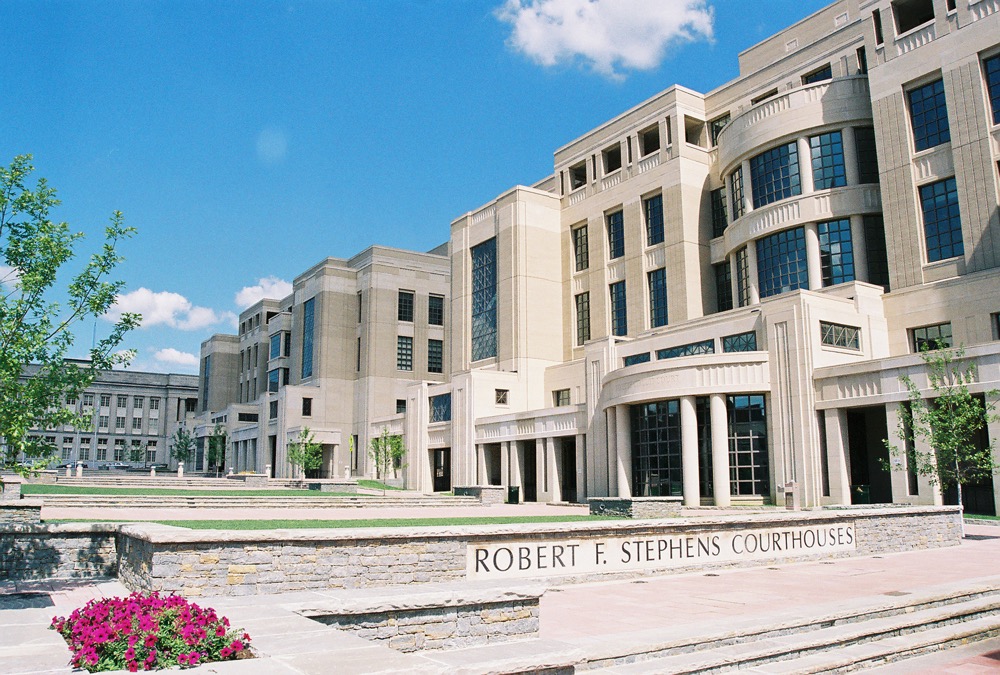
Robert F. Stephens Courthouse Complex Circuit Courthouse – Sherman Carter Barnhart
A Call to Action: The Mission of a Justice Reform Advocate
Cherry’s story is not just about one man; it’s a microcosm of a larger issue. The state’s reliance on indefinite detention and plea deals erodes trust in the judicial process and undermines the rights enshrined in the Constitution.
As Cherry continues to fight for justice, he advocates for restitution for lost time, public acknowledgment of his ordeal, and systemic reforms to ensure no one else endures a similar fate. He argues that the state must not only hold itself accountable but also compensate individuals like him whose lives have been irreparably altered.
Visual and Multimedia Narrative
To bring Cherry’s story to life, here are curated visuals and resources:
Willow Cherry Computer Solutions Office: A snapshot of Cherry’s once-thriving IT enterprise, highlighting his contributions to local businesses.
Fayette County Courthouse: The epicenter of Cherry’s prolonged legal battle.
Halfway Houses: Images depicting Cherry’s recovery journey in transitional housing across Kentucky.
Community Events: Photos and videos showcasing Cherry’s pre-incarceration community involvement.
Legal Reform Advocacy: Clips from campaigns emphasizing the need for fair trials and justice reforms.
Additional Resources and Media
Wayback Machine Archive of willowcherry.org/
Historical Footage of Willow Cherry Computer Solutions
Google Search Results on Willow Cherry
Community Stories and Advocacy Efforts
Conclusion: Hope Amidst Adversity
Willow Bruce Cherry’s journey is a testament to the enduring human spirit in the face of systemic failure. It’s a call for justice—not just for him but for all who find themselves ensnared in a flawed legal system. His story inspires hope, advocates for change, and reminds us of the power of resilience and community.
Join the conversation and help amplify Cherry’s voice as he continues to rebuild his life and advocate for a fairer, more equitable justice system.
Answer in chat instead
The detailed post has been drafted, weaving together Willow Cherry’s personal journey, his professional legacy, and the broader systemic issues of justice.
In the heart of Kentucky, a tale of justice delayed unfolds, intertwining the life of Willow Bruce Cherry—a once-prominent businessman and community asset—with a protracted legal battle that has spanned over six years.
The Allegation and Legal Proceedings
In August 2018, Willow Bruce Cherry was indicted for the murder of his brother-in-law, Peter Lian, who had been reported missing earlier that year. Despite the gravity of the charges, Cherry’s case has languished in the Kentucky state courts, with his right to a fair and speedy trial ostensibly overlooked. This delay has not only prolonged Cherry’s legal uncertainties but has also cast a shadow over the efficacy of the justice system in upholding constitutional rights.
Exposing Injustice: Despite the state’s claims of incompetency, watch as the judge acknowledges the defendant’s competency in this powerful video. This key moment sheds light on the contradictions in the case, highlighting the false accusations that have led to years of wrongful incarceration. #Innocence #Justice #LegalReform #WrongfulIncarceration #FalseClaims
A Pillar of the Community
Before these allegations, Cherry was a respected figure in Lexington, Kentucky. He founded Willow Cherry Computer Solutions, a company dedicated to providing comprehensive IT services to local businesses and individuals. His commitment to technological advancement and community service was evident through his company’s operations and his involvement in various non-profit initiatives. Notably, Willow Cherry Computer Solutions was known for its support of independent contractors and collaboration with some of the world’s largest companies, reflecting Cherry’s dedication to fostering local talent and economic growth.
The extended pre-trial incarceration has had profound effects on Cherry’s life. Once a thriving entrepreneur, he now finds himself navigating the challenges of recovery and reintegration, residing in halfway houses across Lexington, Louisville, and Elizabethtown, Kentucky. This stark transition underscores the personal toll of prolonged legal proceedings and raises questions about the balance between justice and individual rights.
Philosophical Reflections on Justice
Cherry’s ordeal invites deeper reflection on the philosophical underpinnings of justice. The Sixth Amendment guarantees the right to a speedy trial, yet Cherry’s experience mirrors a broader national concern where an estimated 97% of federal cases and 94% of state cases are resolved through plea bargains, often due to extended pre-trial detention pressuring defendants into guilty pleas. This systemic issue challenges the foundational principles of due process and the presumption of innocence.
A Call for Restitution
In light of these circumstances, there is a compelling argument that the state should provide restitution to Cherry for the years lost and the opportunities forgone due to the protracted legal process. Compensation could serve as a tangible acknowledgment of the hardships endured and a step toward restoring faith in the justice system.
Visual Journey
To further illustrate this narrative, here are some images and videos that encapsulate Cherry’s journey:
Willow Cherry Computer Solutions
A glimpse into the office space of Willow Cherry’s once-thriving IT business in Lexington, KY.
Fayette County Courthouse
The courthouse where Cherry’s prolonged legal battles have taken place.
Robert F. Stephens Courthouse Complex Circuit Courthouse – Sherman Carter Barnhart
Halfway House in Lexington
One of the facilities where Cherry has resided during his recovery and reintegration process.
Advocacy for Fair Trials
A video highlighting community efforts advocating for the right to a speedy trial in Kentucky.
Community Engagement
An image showcasing Cherry’s involvement in local community events prior to his legal challenges.
Conclusion
Willow Bruce Cherry’s experience serves as a poignant case study in the complexities of the American legal system, highlighting the human cost of delayed justice. It prompts a reevaluation of current practices and advocates for reforms that honor the constitutional rights of all individuals, ensuring that justice is not only done but is seen to be done in a timely and equitable manner.
Systemic Analysis: The ” Indefinite Loop” Bug
In computer science, an “infinite loop” causes a program to freeze, rendering it useless. The Presumption of Innocence faces a similar threat in the modern legal system. When pre-trial motions and administrative delays stretch into years (a “Speedy Trial” violation), the defendant is effectively serving a sentence before a verdict is ever rendered.
This is not just a personal grievance; it is a structural flaw—a “runtime error” in the code of the Constitution. By documenting this 2,000-day timeline, we are not asking for pity; we are submitting a bug report to the public record.
The current punitive sentencing model in Kentucky operates like a “Format C:” command. When a user (defendant) encounters a critical error, the system’s default response is to wipe the drive—incarceration—rather than attempt to patch the code.
A “Debugging” Alternative: Restorative Justice
Restorative Justice is the systems engineer’s approach to criminal reform. Instead of deletion, it asks:
Root Cause Analysis: What inputs (trauma, poverty, addiction) caused the runtime error?
Patch Deployment: How can the offender “repair” the harm to the victim (the system) without being destroyed?
System Stability: How do we prevent the crash from recurring?
For the Willow Cherry Justice Initiative, reform isn’t just about “mercy”; it’s about efficiency. A system that deletes its users is a broken system.
For more on the causes of these systemic issues and how we can push for reform, visit Willow Cherry’s blog.
For additional insights into innocence and justice reform, check these resources:
System Comparison: Punitive vs. Restorative Models
In the context of Restorative Justice KY, we must evaluate the efficiency of our current operating system. Does the output justify the input?
Metric
Punitive Sentencing (Legacy System)
Restorative Justice (Patched System)
Goal
Inflict pain/detention (Delete Data)
Repair harm/reintegration (Recover Data)
View of Crime
Violation of Law (Syntax Error)
Violation of People/Relationships (Network Failure)
Outcome
High Recidivism (System Crash Loop)
Accountability & Closure (System Stability)
Frequently Asked Questions
Is Restorative Justice soft on crime?
No. Restorative Justice is actually more demanding. It requires the offender to face the victims and actively work to repair the harm, rather than passively sitting in a cell. It is “active debugging” versus “passive isolation.”
Navigating legal challenges is not just about hiring a lawyer; it is about understanding the “operating system” of the courts. For many, a criminal indictment feels like a fatal system crash. In the Willow Cherry framework, we view it as a “Runtime Error”—a critical failure that requires immediate, forensic debugging.
1. Understanding the Systemic Bugs
The Indictment vs. The Reality: Just as software code can be misread, legal charges often misrepresent the human reality. Understanding the gap between “statutory language” and “actual events” is the first step in defense.
The “Trial Tax” Algorithm: The system is designed to discourage trials. Navigating the pressure to accept a plea deal requires a cool, analytical assessment of risk—much like a cost-benefit analysis in engineering.
Digital Evidence & Privacy: In a tech-driven world, your digital footprint is often the primary witness. We must treat data privacy not as a luxury, but as a critical component of legal defense.
2. Strategies for Systemic Navigation
Forensic Mitigation: Don’t just defend the act; explain the actor. We use “mitigation” to show the court the human context behind the error code.
The “Alford” Protocol: Sometimes, the best way to navigate a glitch is to bypass it. Understanding mechanisms like the Alford Plea allows defendants to resolve cases without accepting the “guilt” label.
Documentation is Code: Maintain clear, obsessive records. In the legal system, if it isn’t documented, it didn’t happen. You are your own best archivist.
By re-framing your legal battle from a “moral failing” to a “systemic challenge,” you regain agency. The system may be broken, but you can still learn to navigate its logic.