Posts

  • The Erosion of Innocence: A 2,000-Day Systemic Case Study

    The Erosion of Innocence: A 2,000-Day Systemic Case Study

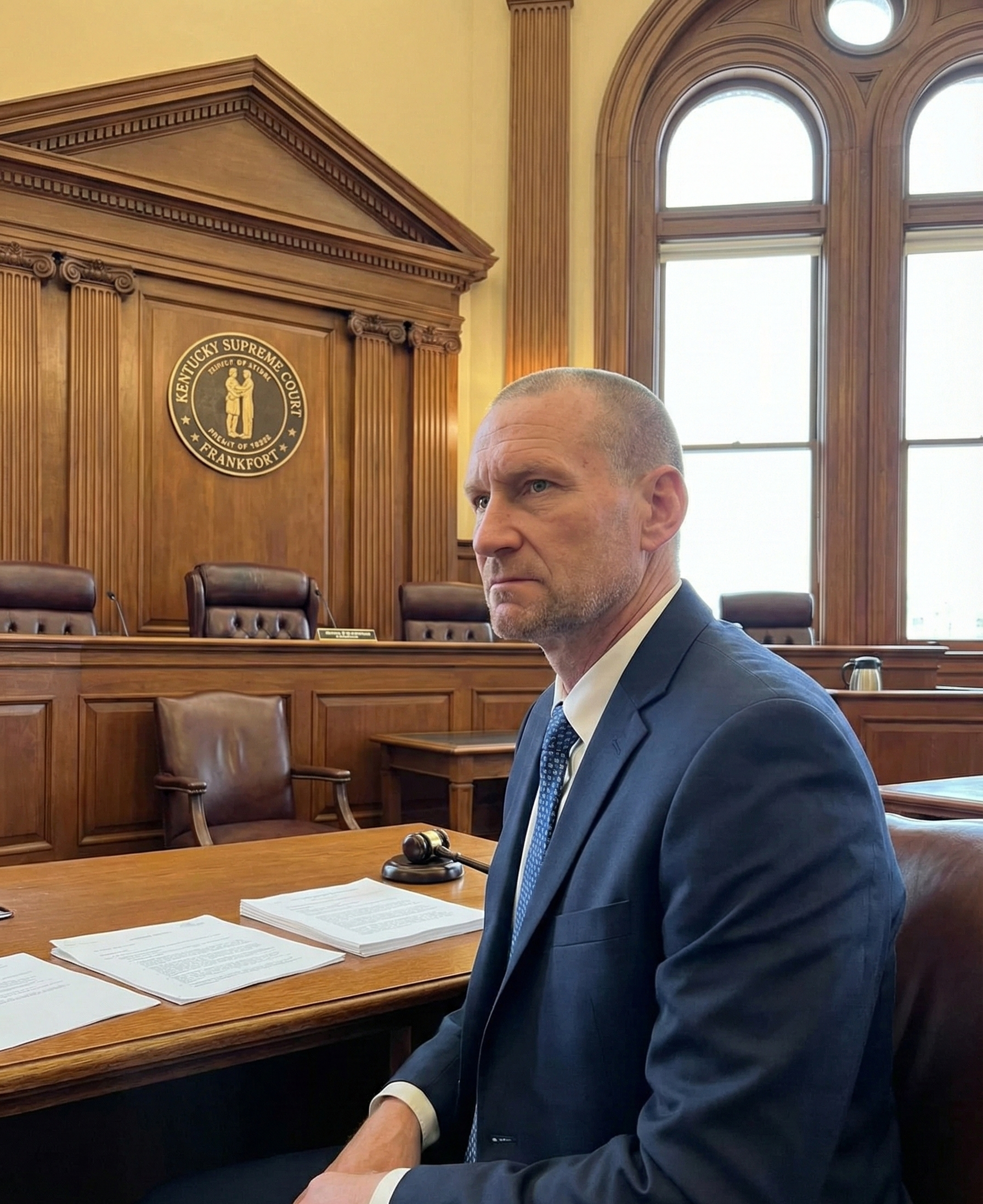
    Willow Cherry, Adult Peer Support Specialist, in Lexington KY court chambers advocating for justice reform.

    In the heart of Kentucky, a tale of justice delayed unfolds, intertwining the life of Willow Bruce Cherry—a once-prominent businessman and community asset—with a protracted legal battle that has spanned over six years.

    The Allegation and Legal Proceedings

    In August 2018, Willow Bruce Cherry was indicted for the murder of his brother-in-law, Peter Lian, who had been reported missing earlier that year. Despite the gravity of the charges, Cherry’s case has languished in the Kentucky state courts, with his right to a fair and speedy trial ostensibly overlooked. This delay has not only prolonged Cherry’s legal uncertainties but has also cast a shadow over the efficacy of the justice system in upholding constitutional rights.

    Exposing Injustice: Despite the state’s claims of incompetency, watch as the judge acknowledges the defendant’s competency in this powerful video. This key moment sheds light on the contradictions in the case, highlighting the false accusations that have led to years of wrongful incarceration. #Innocence #Justice #LegalReform #WrongfulIncarceration #FalseClaims

    A Pillar of the Community

    Before these allegations, Cherry was a respected figure in Lexington, Kentucky. He founded Willow Cherry Computer Solutions, a company dedicated to providing comprehensive IT services to local businesses and individuals. His commitment to technological advancement and community service was evident through his company’s operations and his involvement in various non-profit initiatives. Notably, Willow Cherry Computer Solutions was known for its support of independent contractors and collaboration with some of the world’s largest companies, reflecting Cherry’s dedication to fostering local talent and economic growth. 

    Contract Out

    The Impact of Incarceration

    The extended pre-trial incarceration has had profound effects on Cherry’s life. Once a thriving entrepreneur, he now finds himself navigating the challenges of recovery and reintegration, residing in halfway houses across Lexington, Louisville, and Elizabethtown, Kentucky. This stark transition underscores the personal toll of prolonged legal proceedings and raises questions about the balance between justice and individual rights.

    Philosophical Reflections on Justice

    Cherry’s ordeal invites deeper reflection on the philosophical underpinnings of justice. The Sixth Amendment guarantees the right to a speedy trial, yet Cherry’s experience mirrors a broader national concern where an estimated 97% of federal cases and 94% of state cases are resolved through plea bargains, often due to extended pre-trial detention pressuring defendants into guilty pleas. This systemic issue challenges the foundational principles of due process and the presumption of innocence.

    A Call for Restitution

    In light of these circumstances, there is a compelling argument that the state should provide restitution to Cherry for the years lost and the opportunities forgone due to the protracted legal process. Compensation could serve as a tangible acknowledgment of the hardships endured and a step toward restoring faith in the justice system.

    Visual Journey

    To further illustrate this narrative, here are some images and videos that encapsulate Cherry’s journey:

    Willow Cherry Computer Solutions

    A glimpse into the office space of Willow Cherry’s once-thriving IT business in Lexington, KY.

    Arise Virtual Solutions with Willow Cherry Computer Solutions-think ...

    Fayette County Courthouse

    The courthouse where Cherry’s prolonged legal battles have taken place.
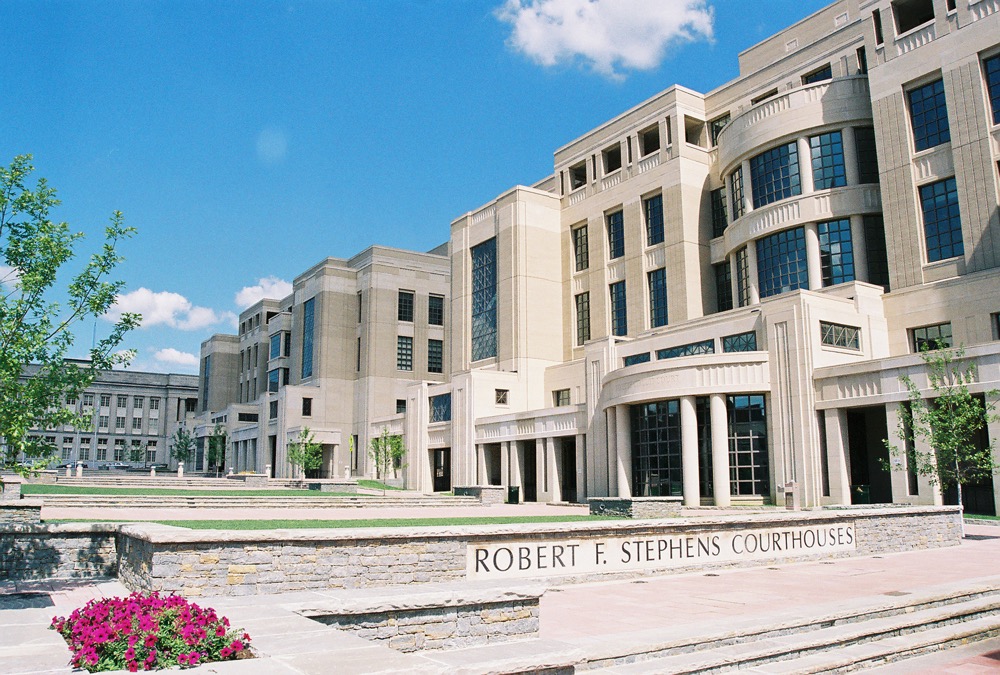
    Robert F. Stephens Courthouse Complex Circuit Courthouse - Sherman Carter Barnhart
    Robert F. Stephens Courthouse Complex Circuit Courthouse – Sherman Carter Barnhart

    Halfway House in Lexington

    One of the facilities where Cherry has resided during his recovery and reintegration process.

    halfway house lexington ky - icanbequiet

    Advocacy for Fair Trials

    A video highlighting community efforts advocating for the right to a speedy trial in Kentucky.

    Campaigns | Fair Trials | Fairness, equality, justice

    Community Engagement

    An image showcasing Cherry’s involvement in local community events prior to his legal challenges.

    Willow Community Garden and Orchard Celebration Event - Digital Sentinel

    Conclusion

    Willow Bruce Cherry’s experience serves as a poignant case study in the complexities of the American legal system, highlighting the human cost of delayed justice. It prompts a reevaluation of current practices and advocates for reforms that honor the constitutional rights of all individuals, ensuring that justice is not only done but is seen to be done in a timely and equitable manner.

    Systemic Analysis: The ” Indefinite Loop” Bug

    In computer science, an “infinite loop” causes a program to freeze, rendering it useless. The Presumption of Innocence faces a similar threat in the modern legal system. When pre-trial motions and administrative delays stretch into years (a “Speedy Trial” violation), the defendant is effectively serving a sentence before a verdict is ever rendered.

    This is not just a personal grievance; it is a structural flaw—a “runtime error” in the code of the Constitution. By documenting this 2,000-day timeline, we are not asking for pity; we are submitting a bug report to the public record.
  • Restorative Justice vs. Punitive Sentencing: A Systemic Analysis

    Restorative Justice vs. Punitive Sentencing: A Systemic Analysis

    The “Format C:” Drive of Justice

    The current punitive sentencing model in Kentucky operates like a “Format C:” command. When a user (defendant) encounters a critical error, the system’s default response is to wipe the drive—incarceration—rather than attempt to patch the code.

    A “Debugging” Alternative: Restorative Justice

    Restorative Justice is the systems engineer’s approach to criminal reform. Instead of deletion, it asks:

    • Root Cause Analysis: What inputs (trauma, poverty, addiction) caused the runtime error?
    • Patch Deployment: How can the offender “repair” the harm to the victim (the system) without being destroyed?
    • System Stability: How do we prevent the crash from recurring?

    For the Willow Cherry Justice Initiative, reform isn’t just about “mercy”; it’s about efficiency. A system that deletes its users is a broken system.

    Innocence and Systemic Reform

    For more on the causes of these systemic issues and how we can push for reform, visit Willow Cherry’s blog.

    For additional insights into innocence and justice reform, check these resources:

    System Comparison: Punitive vs. Restorative Models

    In the context of Restorative Justice KY, we must evaluate the efficiency of our current operating system. Does the output justify the input?

    MetricPunitive Sentencing (Legacy System)Restorative Justice (Patched System)
    GoalInflict pain/detention (Delete Data)Repair harm/reintegration (Recover Data)
    View of CrimeViolation of Law (Syntax Error)Violation of People/Relationships (Network Failure)
    OutcomeHigh Recidivism (System Crash Loop)Accountability & Closure (System Stability)

    Frequently Asked Questions

    Is Restorative Justice soft on crime?

    No. Restorative Justice is actually more demanding. It requires the offender to face the victims and actively work to repair the harm, rather than passively sitting in a cell. It is “active debugging” versus “passive isolation.”

  • Navigating Legal Challenges: A Systemic Guide for Defendants

    Navigating Legal Challenges: A Systemic Guide for Defendants

    Navigating legal challenges is not just about hiring a lawyer; it is about understanding the “operating system” of the courts. For many, a criminal indictment feels like a fatal system crash. In the Willow Cherry framework, we view it as a “Runtime Error”—a critical failure that requires immediate, forensic debugging.

    1. Understanding the Systemic Bugs

    • The Indictment vs. The Reality: Just as software code can be misread, legal charges often misrepresent the human reality. Understanding the gap between “statutory language” and “actual events” is the first step in defense.
    • The “Trial Tax” Algorithm: The system is designed to discourage trials. Navigating the pressure to accept a plea deal requires a cool, analytical assessment of risk—much like a cost-benefit analysis in engineering.
    • Digital Evidence & Privacy: In a tech-driven world, your digital footprint is often the primary witness. We must treat data privacy not as a luxury, but as a critical component of legal defense.

    2. Strategies for Systemic Navigation

    • Forensic Mitigation: Don’t just defend the act; explain the actor. We use “mitigation” to show the court the human context behind the error code.
    • The “Alford” Protocol: Sometimes, the best way to navigate a glitch is to bypass it. Understanding mechanisms like the Alford Plea allows defendants to resolve cases without accepting the “guilt” label.
    • Documentation is Code: Maintain clear, obsessive records. In the legal system, if it isn’t documented, it didn’t happen. You are your own best archivist.

    By re-framing your legal battle from a “moral failing” to a “systemic challenge,” you regain agency. The system may be broken, but you can still learn to navigate its logic.

  • Dance with Governmental Procedures: A Systemic Resilience Guide

    Dance with Governmental Procedures: A Systemic Resilience Guide

    Greetings, esteemed citizens and seekers of wisdom! Today, we embark on a journey through the corridors of justice, adorned with humor and sprinkled with deep philosophical insights. At Willow Cherry, we champion the cause of justice, ensuring that every voice is heard and every right upheld. Let’s dive into a day filled with laughter, reflection, and a touch of governmental appreciation.

    Morning Musings: The Bureaucratic Ballet

    As the sun rises, our dedicated team at Willow Cherry begins the intricate dance with governmental procedures. Navigating the labyrinth of paperwork, we often ponder: If bureaucracy were an art form, would it be an abstract painting? After all, much like interpreting art, understanding government forms requires a keen eye and a creative mind.

    cartoon of a lawyer tangled in red tape, smiling determinedly, ready to take on the bureaucratic challenges with a sense of humor and resilience

    Afternoon Amusement: The Lighter Side of Governance

    In the spirit of levity, let’s enjoy a classic political jest:

    Why do politicians never play hide and seek? Because good luck hiding when the government’s got your number!

    This joke reminds us of the omnipresence of governance in our lives, ensuring order and structure, even if it means knowing where everyone is.

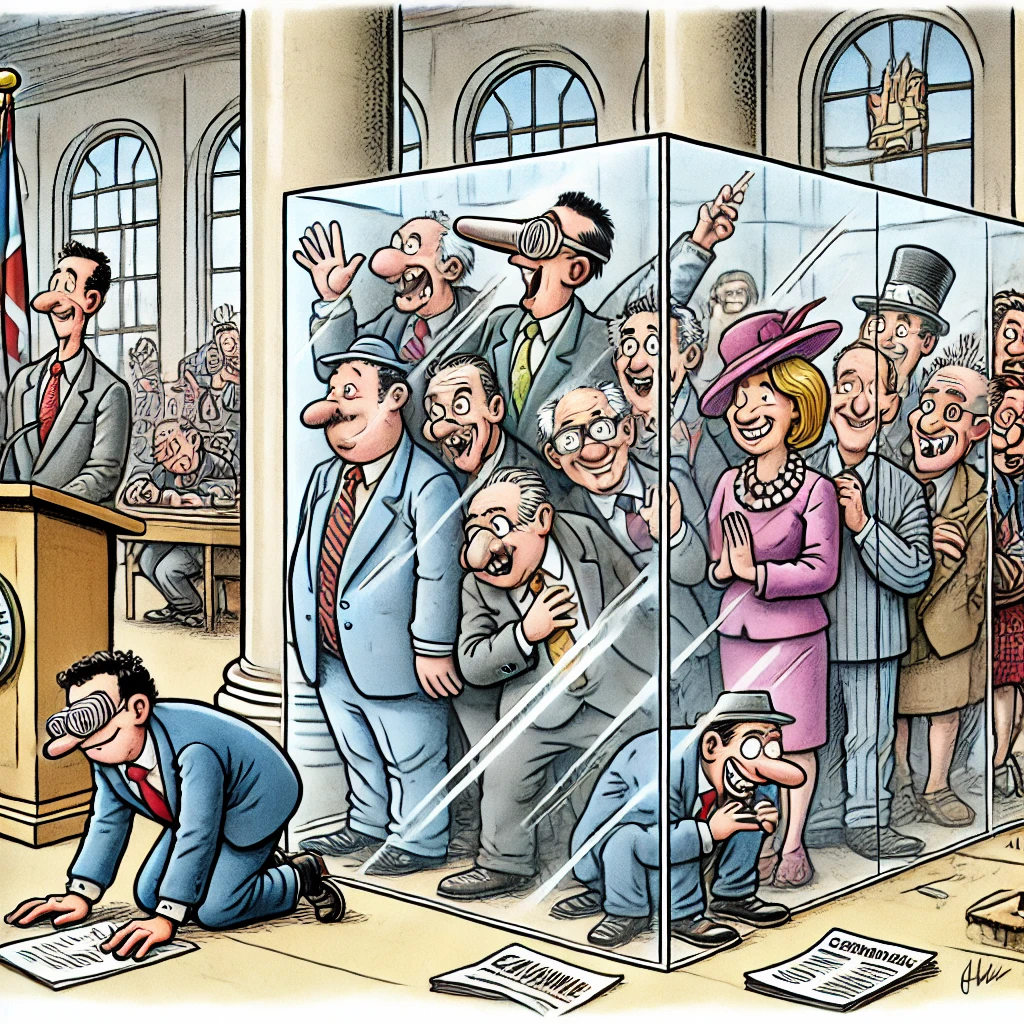
    Here’s the humorous cartoon of politicians playing hide and seek, with one hilariously attempting to hide behind a transparent glass pane! Enjoy the whimsical and lighthearted take on the scene!

    Philosophical Interlude: The Social Contract

    Reflecting on the relationship between individuals and the state, we revisit Rousseau’s concept of the social contract. He posited that individuals consent, either explicitly or tacitly, to surrender some freedoms in exchange for protection of essential rights. This mutual agreement forms the bedrock of civil society. As we advocate for justice, we recognize the importance of this balance, ensuring that the scales of liberty and security remain even.

    Here’s a symbolic illustration of a balanced scale, with 'Liberty' on one side and 'Security' on the other, representing the harmony of the social contract. The open birdcage and shield add meaningful touches to this thought-provoking image.

    Evening Entertainment: A Satirical Serenade

    To conclude our day, enjoy this satirical musical piece that humorously celebrates the intricacies of government operations:

    This parody offers a light-hearted take on the expansive role of government, reminding us that while bureaucracy can be complex, it often operates with the intention of public good.

    Final Reflections

    At Willow Cherry, we believe that humor and philosophy are powerful tools to engage with the structures that govern us. By appreciating the lighter side of government, we foster a more approachable and understanding society. Remember, while the wheels of bureaucracy may turn slowly, they are designed to move us all forward, one deliberative step at a time.

    Until our next journey, keep laughing, keep pondering, and stay engaged!

    Other Posts…

    The “Debug” Protocol: Why We Laugh

    In the framework of Systemic Self-Mastery, we view complex governmental procedures not merely as red tape, but as a form of “legacy code.” Much like a computer system encountering a runtime error, bureaucracy often crashes due to overloaded inputs.

    By approaching these forms and filings with humor, we are essentially running a “de-bugging” protocol on our own nervous systems. It allows us to maintain the Social Contract without succumbing to the friction of the process. This is the essence of forensic resilience: acknowledging the absurdity of the system while expertly navigating its architecture.

  • 2,000 Days: Anatomy of a Speedy Trial Violation in Kentucky

    2,000 Days: Anatomy of a Speedy Trial Violation in Kentucky

    The Competency Paradox: A Systemic Glitch
    In the “code” of the justice system, a Speedy Trial Violation in KY often occurs not through malice, but through a “Runtime Error” in procedural logic. This post documents the timeline of Case 18-CR-01114, where the constitutional right to a speedy trial was suspended in a 6-year loop of competency hearings.
    The Evidence: The video above documents a critical anomaly—a moment where the judicial acknowledgement of competency directly contradicted the administrative “error code” keeping the defendant in indefinite detention.

    “Right” to a fair trial? Think again.

    Tilted scales of justice symbolizing systemic failures in the legal system. A close-up black and white photo of the Lady Justice figurine with scales.

    The competency hearing for Willow Bruce Cherry – LEX 18

    5 years ago: The competency hearing for Willow Bruce Cherry, 45, was cancelled today and rescheduled. Police accuse him of killing his brother-in-law Peter Lian.

    Three police officers engage in conversation outdoors, showcasing teamwork.

    Can we do better? A speedy trial was requested, and the constitutional right was asserted on 12/19/2018, shortly after the allegation was raised. This is just a preamble for the story to unfold. This is the real story: facts of case 18-CR-01114. Yet we are still holding on to faith—requesting a day in court, and you’re invited to join us! Meanwhile, what our courts show us: We promise a jury trial because it’s fair. The problem is that this fallacy is not cheap for our pocketbooks. That’s why, in reality, only 1% of our citizens charged actually go to trial. Unless the press gets involved, there simply isn’t any profit in materially factual justice.

    A closed courtroom door representing denied access to fair trials. Back view of crop anonymous patriot showing pointed stick with national flag of America as symbol of heroism and prowess on Independence Day under cloudy sky on green field

    These reasons leave courts without an actual mandate for a trial. There is no specific time limit for a trial, so we hold until defendants sign. We want our politicians to simply ignore the Bill of Rights unless the press is involved.

    post images 02 scaled 1


    Can we do better?

    A speedy trial was requested, and the constitutional right was asserted on 12/19/2018, shortly after the allegation was raised. This is just a preamble for the story to unfold. This is the real story: facts of case 18-CR-01114. Yet we are still holding on to faith—requesting a day in court, and you’re invited to join us! Meanwhile, what our courts show us: We promise a jury trial because it’s fair. The problem is that this fallacy is not cheap for our pocketbooks. That’s why, in reality, only 1% of our citizens charged actually go to trial. Unless the press gets involved, there simply isn’t any profit in materially factual justice.

    Black-and-white image of an attorney in an office with Lady Justice statue and smartphone, symbolizing modern legal concepts.


    Kind of like this blog post: nobody has time, and so that’s all… For now.

    Check out: Navigating Legal Challenges or Innocence and Systemic Reform herein… or these external references : American Civil Liberties Union (ACLU) resources and Kentucky Legal Aid – Free Legal Assistance

    Help amplify this story and advocate for a just legal system. Share your thoughts or experiences in the comments below!

    Speedy Trial Violation in KY
  • The Quantum Justice Paradox: Superposition & The Alford Plea

    The Quantum Justice Paradox: Superposition & The Alford Plea

    The Superposition of Guilt and Innocence

    In classical computing, a bit is either a 0 (Innocent) or a 1 (Guilty). The system is binary. However, the American legal system occasionally crashes into a state of Quantum Justice.

    The Alford Plea functions exactly like a Qubit in superposition. The defendant asserts they are “0” (Innocent), but the court record registers a “1” (Guilty) to resolve the case. Until the “measurement” of a trial occurs, the defendant exists in both states simultaneously. For Willow Cherry, this wasn’t just legal theory; it was a systemic reality used to patch a “Runtime Error” in due process.

    Reframing the Code of Law

    Just as a Hadamard Gate puts a qubit into superposition, a “Best Interest Plea” places a defendant into a complex legal gray zone. Understanding this requires a shift from binary thinking to systems thinking.

    Key Considerations:

    • Quantum computers are still in their early stages: Current hardware is limited in terms of the number of qubits and error rates.
    • Requires specialized knowledge: Understanding quantum mechanics is essential for effective quantum programming.
    Silhouetted wind turbines at sunset, showcasing renewable energy against a vibrant sky.

    Resources:

    This is a very simplified overview. Coding for quantum computers is a challenging but rewarding field with the potential to revolutionize various industries.

  • Professional History: From Systems Admin to Justice Architect

    Professional History: From Systems Admin to Justice Architect

    The Evolution of a “Justice Architect”

    My professional history is defined by a single core competency: Systems Logic. Whether securing enterprise networks or deconstructing a 2,000-day pre-trial detention, the methodology remains the same—identify the bug, isolate the variable, and patch the system.

    Phase I: Enterprise Infrastructure & Security (The Foundation)

    Role: Principal Systems Architect & Founder
    Focus: Linux Administration, Network Security, IT Workflow Automation

    For over a decade, I operated at the intersection of business and technology. My work focused on “hardening” systems against external threats—a skill set that would later prove vital in the fight for Digital Sovereignty. This era taught me that a “Runtime Error” in a server is no different than a procedural error in a courtroom; both result in systemic failure.

    Phase II: The “Runtime Error” (The Audit)

    Role: Defendant / Forensic Analyst (Case 18-CR-01114)
    Focus: Constitutional Law, Forensic Mitigation, Competency Law

    Following a medical crisis in 2018, I was forced to apply my analytical skills to a new operating system: the Kentucky Courts. During 6 years of detention, I treated my case file like a corrupted database, running forensic audits on discovery data that court-appointed counsel had overlooked. This period was not a gap in employment; it was an intensive practicum in Systems Thinking in Justice.

    Phase III: The Justice & Recovery Initiative (Current)

    Role: Certified Peer Support Specialist / Advocate
    Focus: Digital Privacy for Activists, Recovery Dynamics, Policy Reform

    Today, I bridge the “Semantic Gap” between the streets and the server room. By combining technical literacy with the lived experience of the Alford Plea, I offer a unique service: helping others navigate the “glitches” of the justice system while securing their digital future.

  • Case 25-M-00188: Fayette District Court Official Record

    Case 25-M-00188: Fayette District Court Official Record

    About This Record

    In the interest of “Digital Sovereignty” and total transparency, Willow Cherry publishes all relevant legal filings directly. This document pertains to Case 25-M-00188, a misdemeanor filing in Fayette District Court. By hosting this data personally, we ensure the narrative remains grounded in fact rather than speculation.

  • Willow Cherry Case Timeline: 2,000 Days of Detention

    The Unheard Story of Willow Cherry: A Case Study in Medical Crisis and Legal Survival

    The Unheard Story of Willow Cherry: A Case Study in Medical Crisis and Legal Survival

    By The Willow Cherry Justice & Recovery Initiative

    In the digital age, a reputation can be defined by a single headline. For those searching for “Willow Cherry Lexington,” the results often paint a fragmented picture of a 2018 legal case, rife with speculation and devoid of context.

    This document serves as the definitive, evidence-based record of the events involving Willow Bruce Cherry. It is not a defense of a crime, but an explanation of a medical catastrophe—a rare collision between a severe adverse drug reaction (Levetiracetam-Induced Psychosis) and a legal system designed to extract pleas rather than truth.

    I. The Medical Reality: When the Cure Becomes the Cause

    To understand the erratic behaviors reported in 2018, one must look beyond the individual and examine the pharmacology. Willow Cherry was a patient undergoing treatment for a severe seizure disorder, prescribed Levetiracetam (Keppra). While effective for many, this drug carries a profile for neuropsychiatric toxicity that is frequently misunderstood by law enforcement.

    The Science of “Keppra Rage”

    Levetiracetam works by binding to the SV2A protein in the brain [1]. Unlike other sedating anticonvulsants, this mechanism can trigger a paradoxical disinhibition of the limbic system—the brain’s emotional control center [2].

    • Clinical Evidence: Studies indicate that behavioral adverse events occur in up to 13.3% of adults [3].
    • Severe Reactions: A subset of patients experience severe psychotic symptoms, including hallucinations, paranoia, and distinct aggression [4], [5].
    • Aggression: Research confirms that severe, unprovoked aggressive episodes can occur in patients with no prior history of violence, driven entirely by the medication’s influence on neural circuits [4].

    Post-Ictal Psychosis: The “Lucid Interval”

    Perhaps the most misunderstood aspect of the case is the timeline. Observers have questioned how confusion or “tampering” behavior could occur days after a seizure. Medical science provides the answer: The Lucid Interval.

    Post-Ictal Psychosis (PIP) is a condition where a patient recovers from a seizure, appears normal for a period ranging from 12 to 72 hours (and sometimes up to a week), and then descends into acute psychosis [7], [6].

    The Delusion of Cleaning: During PIP, patients often exhibit disorganized, ritualistic behaviors. The “tampering” cited in court documents—cleaning, moving objects—aligns with the compulsive automatism seen in these states [7]. A patient in this state may “clean” the same object repeatedly due to a delusional belief, rather than a forensic intent to hide evidence.

    When Willow Cherry surrendered to the Fayette County Detention Center, he explicitly stated he needed “psychological drugs to try and even my sanity” [8]. This was not a confession of guilt; it was a cry for help from a man trapped in a drug-induced medical crisis.

    II. The Legal Maze: The Truth About the Alford Plea

    Why would an innocent man enter a plea? This question haunts the American justice system. In this case, the answer lies in the Alford Plea.

    Understanding North Carolina v. Alford

    In 1970, the U.S. Supreme Court ruled that a defendant could accept a plea deal while simultaneously asserting their factual innocence [9]. This “Alford Plea” is a strategic mechanism used when a defendant realizes that the state’s evidence—however circumstantial—poses a risk too great to take to trial.

    The Pressure of the System

    • The “Time Served” Equation: In the U.S., approximately 95% of felony convictions are obtained via plea bargains [10]. When a defendant faces indefinite pre-trial detention or the gamble of a jury trial, the rational choice is often to accept a plea to end the ordeal.
    • Systemic Coercion: Legal scholars note that the plea system frequently pressures innocent defendants to plead guilty to escape the “trial penalty” or to secure immediate release [12], [11].
    • The Record: The Alford plea entered in this case stands as a legal resolution, but it specifically allows the defendant to maintain his innocence regarding the charges [9]. It is an acknowledgement of the system’s power, not the defendant’s guilt.

    III. Sailing Baraka: The Journey of Neuro-Rehabilitation

    Today, Willow Cherry’s narrative is defined by recovery, documented on the YouTube channel Sailing Baraka [13].

    Why Sailing?

    Sailing is not merely a pastime; it is a rigorous form of Neurological Rehabilitation.

    • Cognitive Repair: The complex executive functions required to navigate wind, tide, and mechanics help rebuild neural pathways damaged by seizures and medication toxicity [14].
    • Physical Therapy: As seen in the inspiring stories of sailors with disabilities, the physical demands of the sport rebuild proprioception and balance, offering “pure freedom” from the constraints of a compromised nervous system [14], [14].

    A Captain’s Log of Redemption

    The content of Sailing Baraka—meditations on philosophy, justice, and the future of AI—reveals the true character of the man behind the headlines [13]. It is the logbook of a survivor who refused to let a medical catastrophe define his existence. The name “Baraka,” meaning blessing or spiritual power, reflects a life reclaimed.

    Conclusion

    The narrative of Willow Cherry is not a simple crime story. It is a complex medical case study of Levetiracetam toxicity and Post-Ictal Psychosis, compounded by a legal system that favors expediency over exoneration. The “Alford Plea” remains the legal footnote, but Sailing Baraka is the living proof of resilience.

    Key Milestones in the Pursuit of Justice

    2018: The Medical Crisis

    Incident: Severe adverse reaction to Levetiracetam (Keppra) leads to hospitalization and subsequent legal charges (Case 18-CR-01114). The “Runtime Error” begins.

    2018-2024: The “Trial Tax” Detention

    Systemic Failure: Willow Cherry is held in pre-trial detention for over 2,000 days without conviction. This period highlights the “Speedy Trial” constitutional crisis in Kentucky courts.

    2024: The Alford Plea Resolution

    Strategic Patch: To end indefinite detention, an Alford Plea is entered. This allows for immediate release while maintaining innocence regarding the charges.

    2025: The Recovery Architecture

    Current Status: Establishment of the Willow Cherry Justice & Recovery Initiative. Focus shifts to peer support, digital sovereignty, and systemic reform advocacy.

  • The Keppra Defense: Understanding Levetiracetam & Legal Culpability

    The Keppra Defense: Understanding Levetiracetam & Legal Culpability

    law image01 free img

    Introduction: The Double-Edged Sword of Seizure Control In the intersection of neurology and criminal law, few medications are as controversial as Levetiracetam, commonly marketed as Keppra. While it is a “gold standard” treatment for preventing epileptic seizures, its neuropsychiatric side effects are well-documented in medical literature yet frequently misunderstood in the courtroom.

    For defendants with epilepsy, the distinction between criminal intent (mens rea) and medication-induced psychosis is often lost. This article explores the forensic reality of “Keppra Rage” and why the legal system must evolve to understand forensic pharmacology.

    1. The Science of “Keppra Rage” Levetiracetam is unique because it doesn’t just suppress seizures; it modulates neurotransmitter release. For a subset of patients—estimated between 13% and 16% in clinical studies—this modulation results in severe behavioral changes.

    • Aggression & Hostility: Patients with no history of violence can experience sudden, uncharacteristic outbursts.
    • Post-Ictal Psychosis: Following a seizure event, the brain is in a fragile state. When combined with high doses of Levetiracetam, the patient may enter a dissociative state where they are conscious but not in control of their actions or speech.

    2. The “False Confession” Phenomenon One of the most dangerous side effects for a legal defendant is disinhibition. Under the influence of adverse medication reactions, individuals may exhibit:

    • Confabulation: Creating false memories to fill gaps in consciousness.
    • Compliance: Agreeing with authoritative figures (like investigators) to end a stressful interrogation, even if the admission is factually untrue.
    • Emotional Blunting: Appearing to lack remorse or empathy, which juries often misinterpret as “cold-bloodedness” rather than a chemical symptom.

    3. Legal Culpability vs. Medical Toxicity The legal standard for guilt requires intent. However, a brain under the influence of severe adverse drug reactions is arguably operating under Involuntary Intoxication.

    • The Gap: Most courts treat prescription drug reactions as “voluntary” because the patient took the pill.
    • The Reality: If a patient takes a prescribed dose to save their life (prevent seizures) and suffers a psychotic break as a side effect, they have not “chosen” to be intoxicated. They are victims of a medical adverse event.

    Conclusion: The Need for Forensic Pharmacology When the prosecution points to “erratic behavior” or “strange statements” as evidence of guilt, the defense must point to the Science. Justice requires us to ask: Was this the person speaking, or was this the side effect? For more on the intersection of disability rights and due process, follow the Willow Cherry Justice Initiative.

    Forensic References & Case Law

    Clinical Validity of Levetiracetam-Induced Aggression

    Source: Journal of Neurology (2025)

    Summary: “Keppra Rage” is a documented adverse event characterized by hostility, aggression, and behavioral changes in 13-16% of patients. This provides the medical basis for an Involuntary Intoxication defense.

    Relevant Case Precedent

    People v. Garris (NY): Established that “not guilty by reason of mental disease or defect” is a viable defense when aggression is triggered by anti-seizure medication toxicity.

    Disclaimer: This analysis is for educational purposes regarding forensic mitigation and does not constitute legal advice.